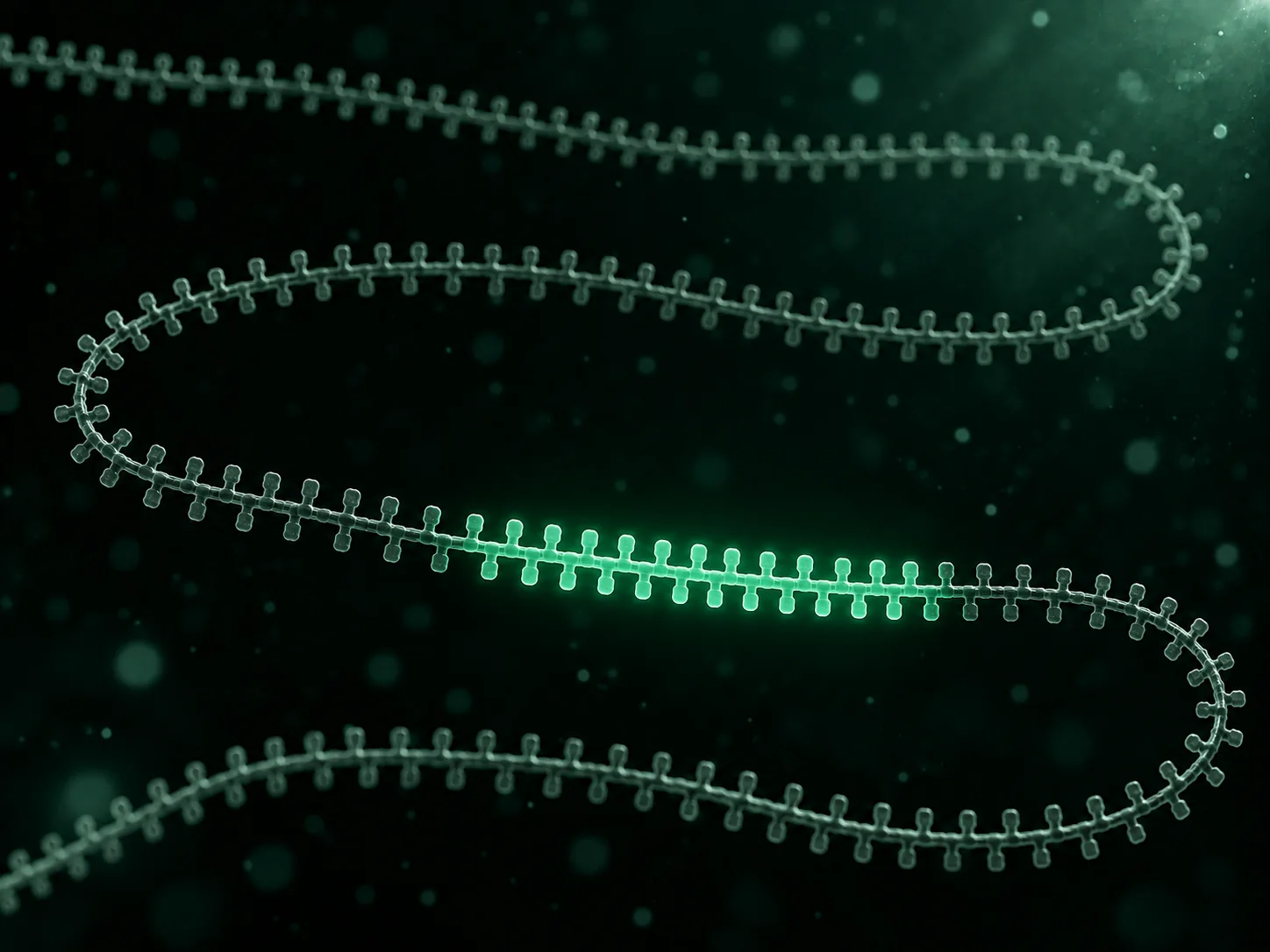
01 · Encode
The anchor is part of the molecule
The anchor can be built into a recombinant protein's sequence, included during solid-phase peptide synthesis, or attached chemically. There are many flavours of PepLock for different applications.


Technology
PepLock is a family of short peptide anchors that give proteins, peptides, antibodies and enzymes built-in immobilisation on solid surfaces. Think of it as protein superglue.
How it works
01 · Encode
The anchor can be built into a recombinant protein's sequence, included during solid-phase peptide synthesis, or attached chemically. There are many flavours of PepLock for different applications.
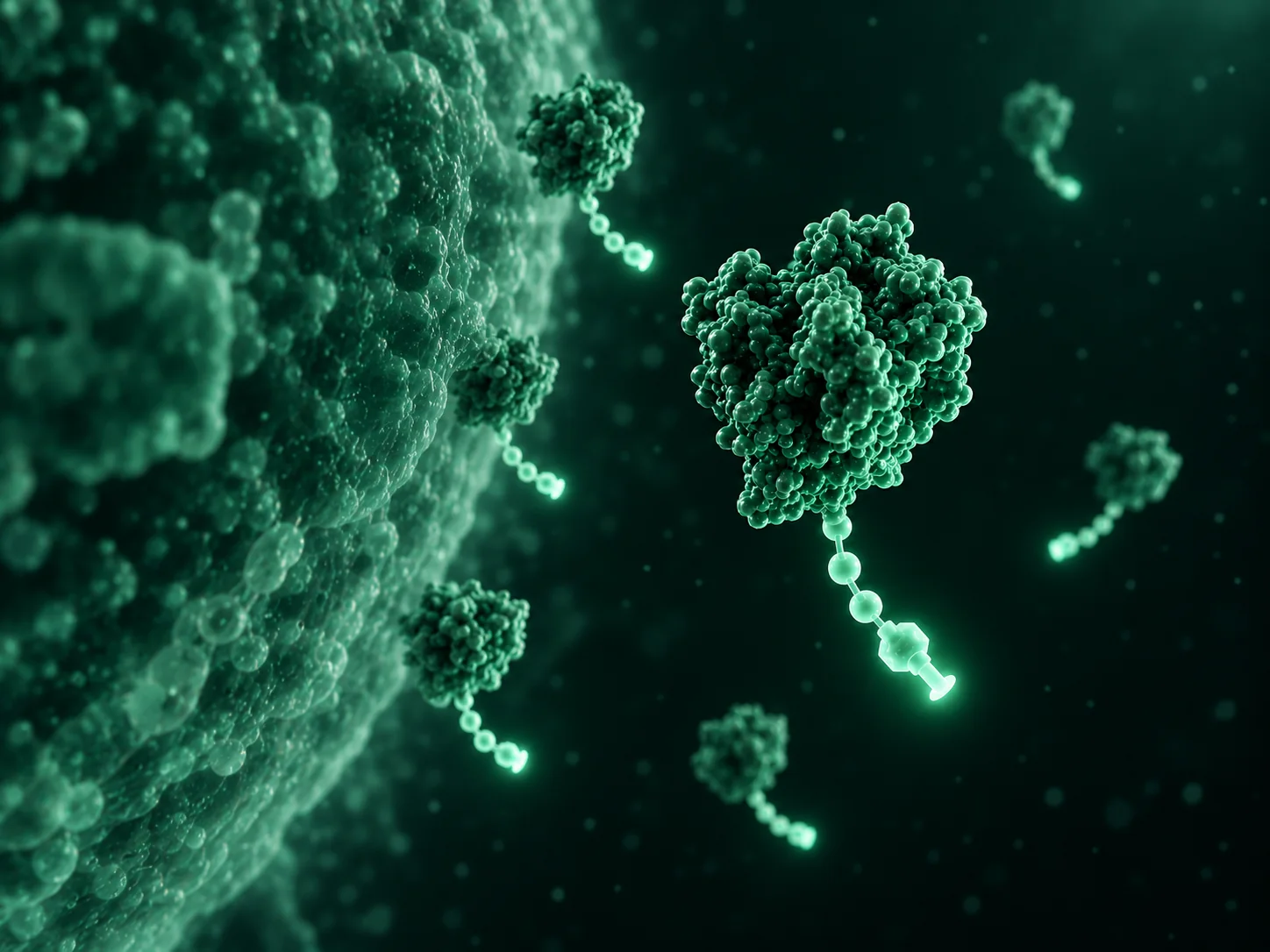
02 · Express and purify
The existing expression and purification workflow is kept. Compatible with common purification tags and workflows: His6, FLAG, Ni-NTA, anti-His, anti-FLAG, Protein A/G.
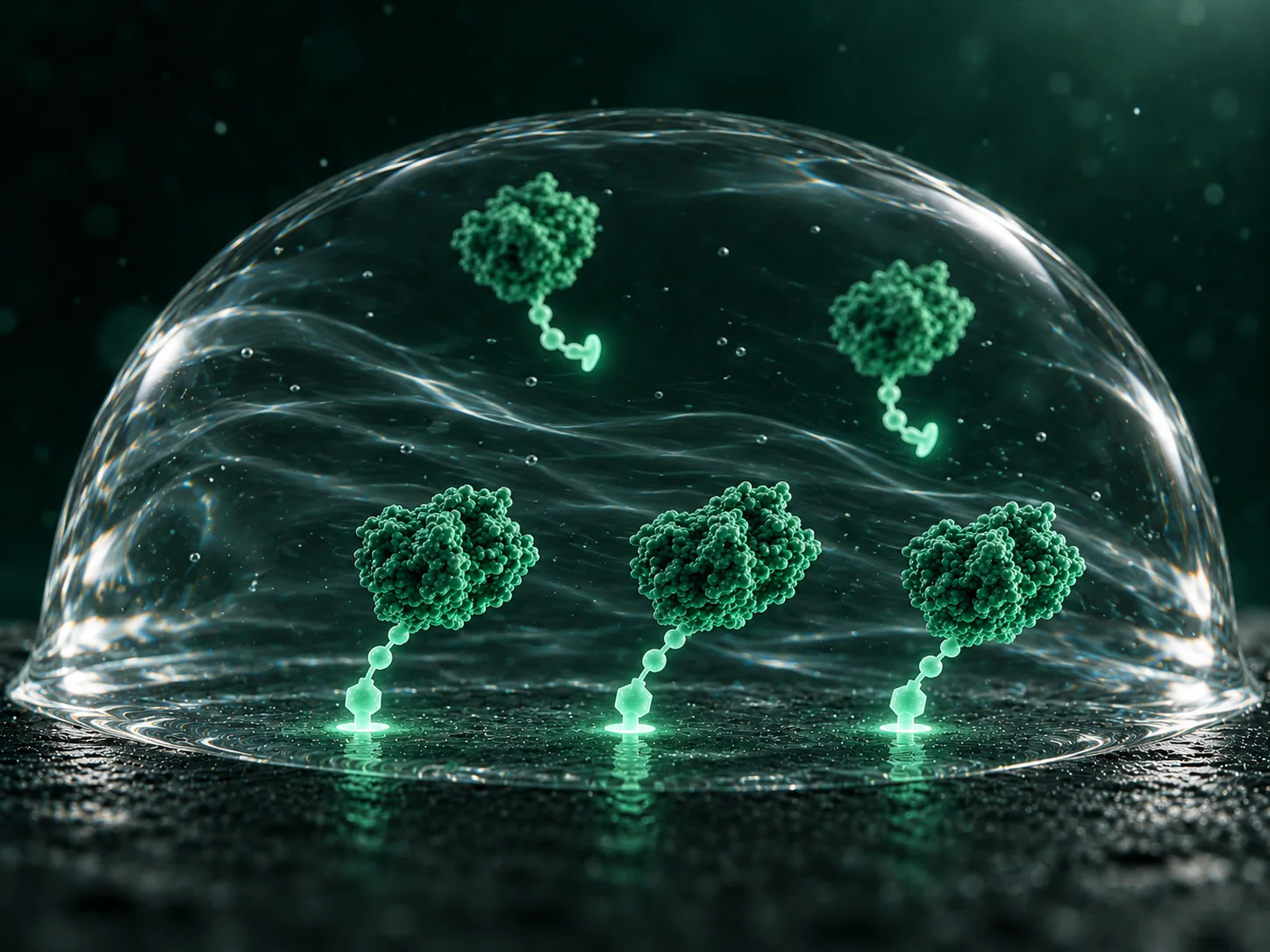
03 · Immobilise
Attaches in a single aqueous step. No coupling reagents, no capture proteins, no extra tags. Site-specific attachment with consistent orientation.
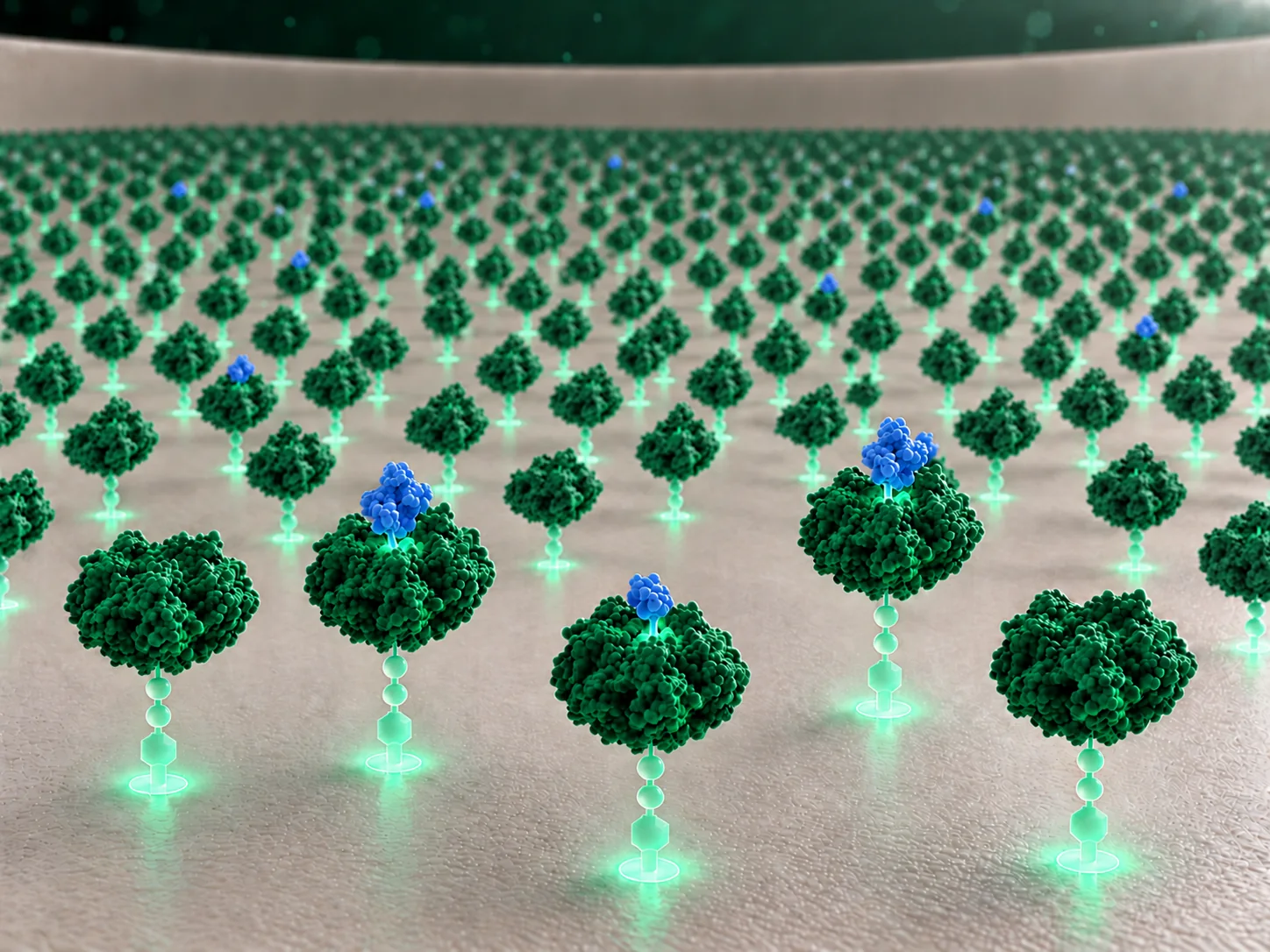
04 · Perform
Higher loading and preserved function compared with conventional immobilisation. Attachment withstands washes, detergents, salts, acids, bases and chaotropes. Confirmed in ELISA, lateral flow, electrochemistry and flow cytometry.
Conventional immobilisation
For each method: what it requires, and where orientation, retention or simplicity is lost.
| Method | What it requires | Where it loses | With PepLock |
|---|---|---|---|
| Passive adsorption | A suitable surface and an incubation step; the protein sticks through nonspecific contacts with the surface. | Orientation is random, some molecules partly unfold or present their binding sites to the surface, and adsorbed protein can be lost in washes and detergents. | The attachment point is built into the molecule. Orientation is consistent. Attachment withstands washes, detergents, salts, acids, bases and chaotropes. |
| EDC/NHS coupling | Activation of a carboxylated surface with coupling reagents, then reaction with amines on the protein, with buffer changes and a quench step. | Any accessible lysine can react, so the attachment point and orientation vary between molecules, and binding sites can be modified or blocked. | No coupling reagent and no activation step: a PepLock-tagged molecule attaches in one aqueous step, site-specifically and with consistent orientation. |
| Maleimide and NHS-ester chemistry | Crosslinking reagents that target cysteines or amines, often with a reduction or activation step and removal of excess reagent. | Site control depends on engineering a unique site; otherwise attachment spreads across many residues, and the reagents are sensitive to hydrolysis. | Surface attachment needs no crosslinker: the anchor is built into the sequence, added during synthesis, or attached chemically. Attachment is a single aqueous step with consistent orientation. |
| Streptavidin-biotin | Biotinylation of the molecule and a surface coated with streptavidin, a capture protein. | Every surface carries a second protein, adding cost and another component to qualify, and chemical biotinylation is not site-specific. | No capture protein and no biotinylation step: a PepLock-tagged molecule attaches without a capture protein, site-specifically, in one aqueous step. |
| His-tag / Ni-NTA capture | A polyhistidine tag on the protein and a nickel-chelate surface. | Capture is designed to release under imidazole, EDTA and other chelators, reducing agents or low pH, which suits purification but not a surface that must hold a protein through repeated use or sample matrices containing those agents. Protein and metal can leach from the surface over time, and histidine-rich proteins can bind non-specifically. | Attachment withstands washes, detergents, salts, acids, bases and chaotropes; PepLock is compatible with a His6 tag kept for purification. |
| SpyTag/SpyCatcher and other isopeptide tag pairs | A peptide tag on the molecule and its partner protein, produced, purified and placed on the surface first; some pairs also rely on an added ligase. | The partner protein adds a protein layer, its production and its cost to every surface. | No partner protein and no catalyst: a PepLock-tagged molecule attaches in one aqueous step, with consistent orientation. |
Scroll the table sideways to see every column.
With PepLock
Site-specific attachment with consistent orientation.
Higher loading and preserved function compared with conventional immobilisation.
Attaches in a single aqueous step.
No coupling reagents, no capture proteins, no extra tags.
PepLock needs no partner protein and no catalyst.
Durability and materials
Attachment withstands washes, detergents, salts, acids, bases and chaotropes.
Handling
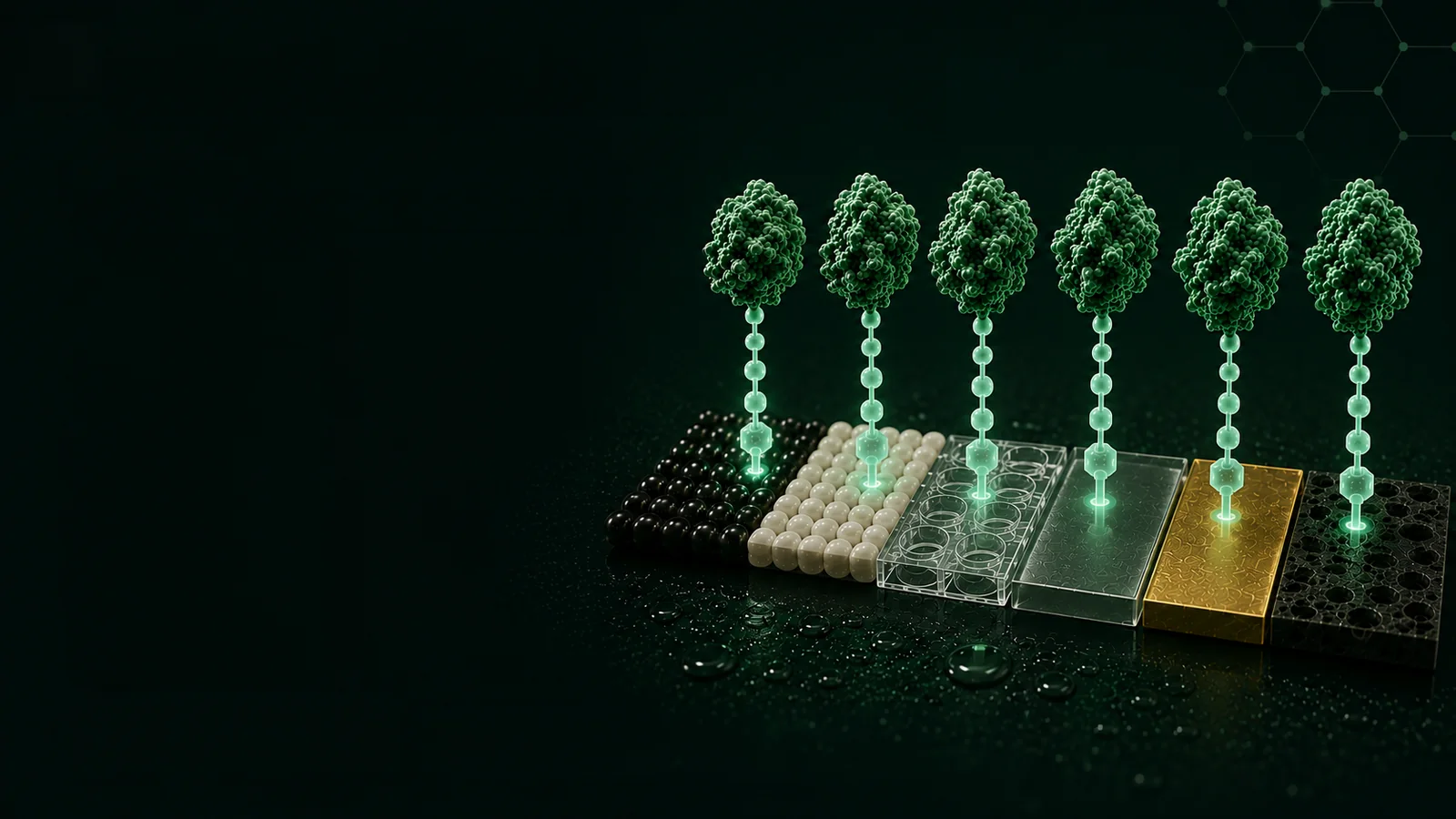
PepLock-tagged molecules do not appreciably bind untreated polypropylene, polyethylene or polystyrene labware, so they handle like any other reagent through tubes, tips and storage plates. Attachment occurs on the intended assay surface, whether that is a treated plate, a bead, nitrocellulose or another functional polymer.
Compatible with common purification tags and workflows:
Evidence
Available under NDA, followed by a technical demonstration.
Demonstrated with eGFP, nanobodies (VHH and VNAR), enzymes, human IgG, mouse IgG and synthetic peptides. In peptide serology, PepLock-tagged peptides show robust binding and improved epitope presentation.
We are speaking with licensing partners and investors.
Or email peplock@biotome.com.au